Reading processing info on a coffee bag: Washed, Honey or Natural?

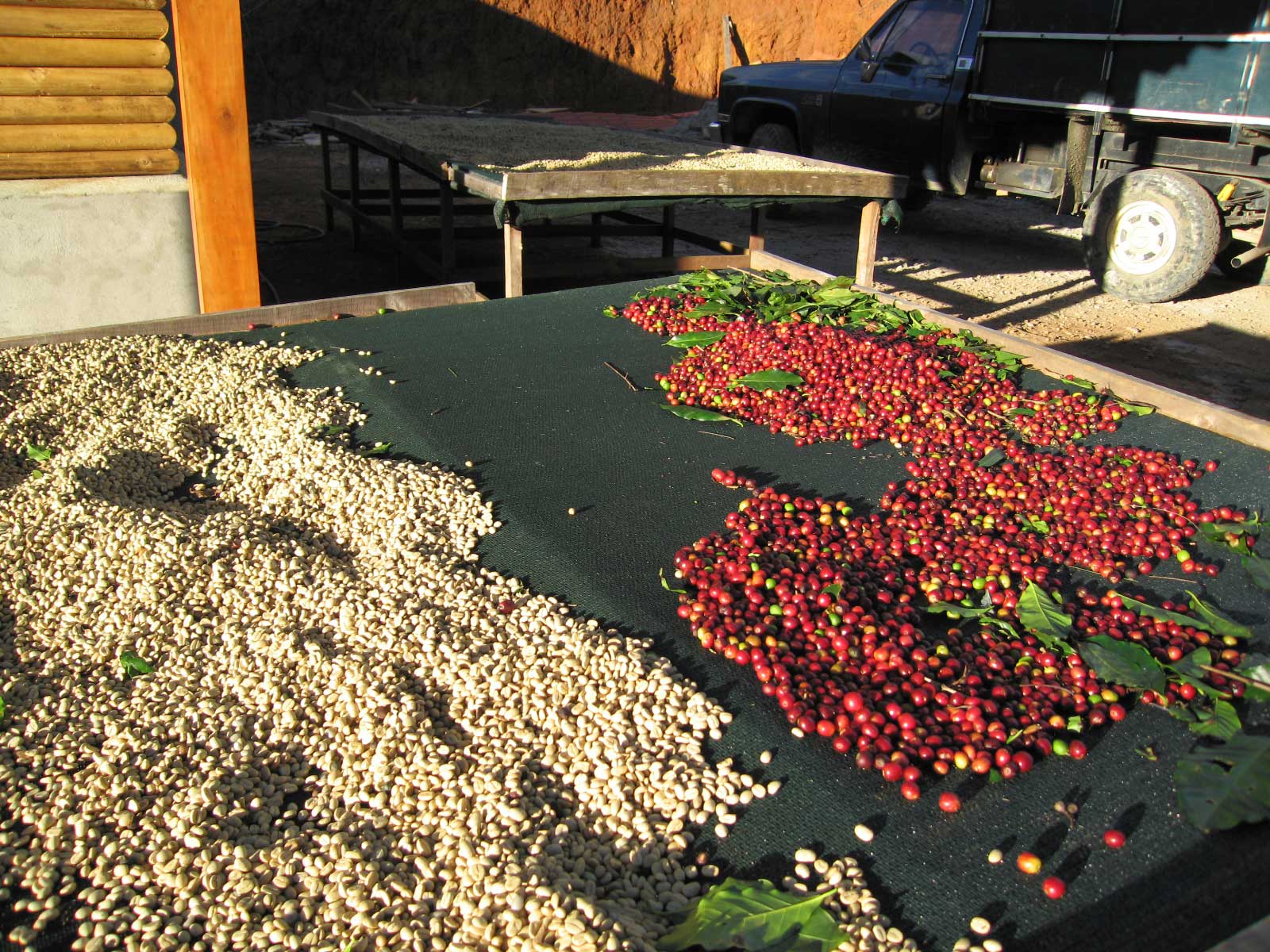
Many coffee drinkers only check the bean name and roast level, then wonder why a new bag tastes sharply different from their usual one. The culprit is often a small word on the label: washed, honey or natural. These three terms describe how the coffee was processed after harvest — the step that shapes most of what lands in your cup. Understand them and you can buy by taste instead of guesswork.

What is processing, and why does it change the flavour?
Processing is how growers remove the fruit from the bean and dry it before it reaches the roaster. The fruit holds sugars, organic acids and microbes; the longer or more of it is left on the bean, the more flavour the bean absorbs. That is why the same variety at the same roast level can taste like two completely different coffees depending on how it was processed.
How do washed, honey and natural differ?
- Washed: the fruit is stripped almost immediately after harvest, then the beans are washed and fermented in water. The cup is usually clean and bright, with citrus or floral notes and a tea-like finish — it shows the terroir clearly.
- Honey (pulped natural): the skin is removed but some mucilage is left on the bean while it dries. The result is more balanced, gently sweet and round, often with caramel or ripe-fruit notes.
- Natural: whole cherries are dried before hulling. The bean absorbs sugar from the fruit, giving a bolder, fruit-forward, sometimes jammy or funky cup with a heavier body.
In short: washed = clean and bright; honey = sweet and round; natural = bold and fruity.
Market view
A study published in the journal Food and Humanity (Elsevier, May 2024) notes that the pulped natural/honey process is drawing growing attention from the specialty coffee market because it combines the strengths of both natural and washed processing while using less water than the traditional wet process — a factor buyers increasingly weigh. Processing info is no longer an internal technical detail; it has become a selling point.
Why choose EPIC
- EPIC has roasted coffee in Saigon since 2014, tuning each batch to its own profile rather than roasting generically, so the character of each processing method stays distinct.
- Green beans are hand-sorted before roasting, which helps remove defects that are harder to control in natural and honey lots.
- Coffee is rested after roasting and packed to order, so you get fresh flavour instead of stock that has sat in a warehouse.
- EPIC has exported coffee to Russia and the Netherlands — a sign its products meet international buyers’ standards.
To taste the difference between processing methods for yourself, browse EPIC’s roasted coffee catalogue at /en/coffee.
Continue the journey
Explore cupping and roast-batch quality control — why a roasting partner tastes before accepting a delivery.
Read: Roast-batch quality control: what is cupping and sensory evaluation? →

We roast in-house at our own drum roastery in Sài Gòn — sourcing single-origin lots from a real, catalogued network and dialling profiles cup by cup for our own bar and for partners across Việt Nam.
@epiccoffeeroaster · Follow on InstagramSpecializing in