How to Evaluate a B2B Coffee Roaster: Hand Sorting, Profiles, Resting & Cupping

Why the Roaster Behind Your Beans Decides Whether Your Cafe Tastes Consistent

If you are opening a cafe or running a business that needs coffee roasted to order, the single most consequential supplier decision you will make is not the grinder, the espresso machine, or the interior design. It is who roasts your coffee. A roaster who works only in broad strokes — one house blend, one roast level, one schedule — will hand you coffee that drifts from bag to bag, and your baristas will spend every shift chasing a moving target. A roaster who works batch by batch, with documented profiles and a real quality gate before delivery, gives you something far more valuable than a good single bag: repeatability.
This guide is written for two audiences. The first is the cafe owner who is about to sign a wholesale agreement and wants to ask better questions than “how much per kilo.” The second is the business that outsources roasting — a restaurant group, an office coffee program, a retail brand — and needs a partner who can hit a specified flavor target across many deliveries. In both cases, the evaluation framework is the same. You are not buying green beans. You are buying a process, and the process is what you should inspect.
Below we break that process into four checkpoints that are genuinely observable during a supplier visit or sample round: hand sorting of green coffee, per-batch profile control, post-roast resting, and cupping before the coffee leaves the building. Each checkpoint comes with the questions to ask and the red flags to watch for.
Checkpoint 1: Hand Sorting of Green Coffee Before the Drum
Defects in green coffee are not abstract. A single quaker — an underdeveloped, pale bean that never took on color during roasting — can flatten a shot of espresso with a peanut-like, papery note. A few sour or mold-damaged beans can push an entire batch toward a fermented, muddy cup. Density and screen-size variation, meanwhile, means the drum will develop some beans faster than others, and no profile can fully compensate for an uneven load.
Hand sorting is the cheapest and most honest defense against all of this, and it is also one of the easiest things to verify. When you visit a roastery, ask to see the green coffee as it arrives and as it is prepared. Specifically:
- Ask whether green coffee is sorted before roasting or only spot-checked. A roaster who sorts before every roast is treating defects as a production problem, not a supplier problem.
- Look at the sorting surface. Is there a dedicated table, light, and tray setup? Is there a reject container with actual rejects in it? An empty reject bin at midday usually means nobody is looking.
- Ask what happens to a bag that arrives with a high defect count. Good roasters either reject the lot, negotiate a credit, or sort it more aggressively and adjust the profile. Poor ones roast it anyway and hope the darkness hides it.
- Check whether sorting standards are written down. Even a one-page defect list with photos tells you the team shares a definition of “clean.”
For a B2B buyer, the practical consequence is stability. Hand-sorted green coffee gives the roaster a predictable starting material, which means the profile you approve on a sample is more likely to reproduce on delivery number ten. If a roaster cannot explain how they handle defects, assume the answer is “inconsistently.”
At EPIC Coffee Roaster, green coffee arrives in bags and is hand sorted before roasting — for our own retail line and for partner orders alike. That is not a marketing flourish; it is the first control point that makes per-batch profiling meaningful.
Checkpoint 2: Per-Batch Profiles, Not a Single House Setting
The phrase “we roast everything medium” should end the conversation. Different origins, different processing methods, different moisture levels, and different intended brew methods all demand different curves. A natural-process Ethiopian that you will serve as filter needs a different charge temperature, different development time, and a different end temperature than a washed Brazilian base destined for espresso. A roaster who cannot articulate this is a roaster who will hand you whatever the drum happened to produce.
What to ask and what to look for:
- “Can I see a roast profile?” Ask for a charge temperature, turning point, first crack timing, development time ratio, and drop temperature for a recent batch. You do not need to be a roasting engineer to notice whether the numbers exist at all.
- “Do you adjust per batch or per lot?” The right answer involves adjustment. Green coffee changes with age and humidity; a roaster who logs batch outcomes and tweaks accordingly is managing variance.
- “How do you handle a batch that misses target?” Listen for a real answer: re-cupping, re-roasting, downgrading to a different use, or holding it back. “It’s fine” is not an answer.
- “Can you build a profile to my target cup?” This is the core of custom B2B roasting. Describe the cup you want — chocolate and caramel with low acidity for milk drinks, or bright and floral for a filter menu — and see whether the roaster responds with questions about origin, process, and brew method, or with a shrug.
Ask also about batch size relative to your order volume. A roaster whose smallest batch is far larger than your monthly need will either over-roast and store, or push you toward volumes you cannot sell. A roaster who can roast to your order size keeps your coffee fresher and your cash flow saner.
Finally, ask how profiles are recorded. Digital logs tied to a specific batch number are ideal, because they let you trace a delivered bag back to a curve. If a defect shows up in week six, traceability is what turns a complaint into a fix.
Checkpoint 3: Resting After Roast and Packaging to Order
Coffee that is bagged minutes off the drum and shipped the same afternoon is not fresh — it is unfinished. Roasted beans release carbon dioxide for days, and packaging them too early traps that gas, distorts the aroma, and can pressurize or balloon the bag. More importantly for a cafe, coffee that has not rested tastes different on day two than on day ten, which makes dialing in espresso a guessing game.
Resting is the step most often skipped by high-volume operations because it costs warehouse space and planning discipline. That is exactly why it is a useful test of a B2B roaster’s seriousness.
- Ask how long coffee rests before packing. The answer should be specific and should vary by roast level and intended use — espresso and filter rarely want the same rest window.
- Ask whether coffee is packed to order or packed to stock. Packing to order means your bag is filled against your delivery date, not pulled from a pallet roasted three weeks ago.
- Ask about packaging format. Degassing valves, sealed seams, and clear roast and pack dates on every bag are baseline expectations. If the date is missing, you cannot manage rotation in your own stockroom.
- Ask about OEM and private label if relevant. If you intend to sell beans under your own brand, confirm that packaging, labeling, and lot coding can be handled to your specification.
For a cafe owner, the operational payoff is simple: a rested, correctly packed bag means your barista’s first dial-in of the week lands closer to target, and your waste from “just not right yet” shots drops. Multiply that across a year and it is a meaningful line item.
Checkpoint 4: Cupping Before Delivery — The Quality Gate You Should Demand
Cupping is the step that converts all the earlier discipline into evidence. A roaster who cups every production batch before it ships is telling you that the batch has been tasted against a reference, not merely timed against a curve. A roaster who cups only when a customer complains is telling you that you are the quality control department.
When evaluating a potential roasting partner, request a cupping session. This is normal, professional, and any serious roastery will welcome it. Come prepared:
- Bring your own brew recipe or espresso parameters so the sample is judged in the format you will actually serve.
- Ask for the reference cup — the approved target profile — alongside the current production batch. Comparing the two is the whole point.
- Ask what happens when a batch fails cupping. You want to hear about rejection thresholds, re-roasting, or holding stock. You do not want to hear that it ships anyway.
- Ask about sample logistics. Can they send samples ahead of a new origin or a profile change? How quickly? A roaster who supports cupping and sample dispatch as a standing service makes it easy for you to approve changes before they reach your bar.
Use the cupping to test consistency directly: ask for two batches of the same coffee roasted on different days and cup them side by side. Small differences are normal and expected. Large swings in acidity, body, or sweetness mean the profile control you inspected in checkpoint two is not holding in practice.
A Practical Checklist for Vetting a Custom B2B Roaster
Bring this list to your first meeting or site visit. Score each item honestly; a roaster does not need to be perfect, but the pattern of answers will tell you whether the process is real.
- Green coffee is hand sorted before roasting, with a defined defect standard and a visible sorting station.
- Roast profiles are recorded per batch, with charge temperature, first crack timing, development time, and drop temperature available on request.
- The roaster asks about your intended brew method and target flavor before proposing a profile.
- Minimum batch size is compatible with your actual order volume.
- Coffee rests after roasting for a stated, use-appropriate period before packaging.
- Bags are packed to order, with valves and clear roast and pack dates.
- Every production batch is cupped against a reference before delivery.
- Failed batches are held or re-roasted, not shipped.
- Samples and cupping sessions are offered as a standard service, not a favor.
- OEM and private-label packaging are available if you plan to sell under your own brand.
- The roastery is open to a visit, and the team can explain its process without deflecting.
- Traceability exists from delivered bag back to batch log.
Two or three misses on this list are worth discussing. Five or more, and you are looking at a supplier who will cost you more in re-dialing, waste, and customer complaints than you save on price per kilo.
Matching the Roaster to Your Cafe’s Actual Needs
Process discipline is necessary but not sufficient. The roaster also has to fit your operation. A few practical considerations that buyers often overlook:
Menu breadth versus focus. If you plan a rotating single-origin filter menu, you need a roaster comfortable with light-to-medium development and willing to roast small lots. If your business is 90 percent milk-based espresso, you need a roaster who can build a consistent, sweet, high-body profile and hold it across many batches. Be honest about which you are.
Delivery rhythm. Ask how often you can receive coffee and in what quantities. Weekly small deliveries keep coffee fresh but require the roaster to plan; monthly bulk deliveries are cheaper to run but push the resting and packaging discipline onto you. Choose the rhythm your storage and staff can actually support.
Support beyond the bag. Roasting is one part of opening a cafe. Ask whether the supplier can help with equipment selection, machine servicing, barista training, or a full cafe setup. A partner who understands your bar workflow will build profiles that suit it — and will tell you honestly when a machine or grinder is the real bottleneck rather than the coffee.
Communication during problems. Every supplier relationship eventually hits a bad batch. What matters is whether you get a phone call, a replacement, and an explanation, or silence. Ask a prospective roaster to describe the last time a batch went wrong and what they did. The specificity of the answer is the tell.
Next Step: Cup Before You Commit
Choosing a B2B roasting partner is not a price negotiation, it is a process audit. Hand sorting tells you the starting material is clean. Per-batch profiling tells you the roaster can hit a target and repeat it. Resting and packing to order tells you the coffee arrives in a servable state. Cupping before delivery tells you someone is actually tasting what leaves the building. Get those four right and the consistency question largely answers itself.
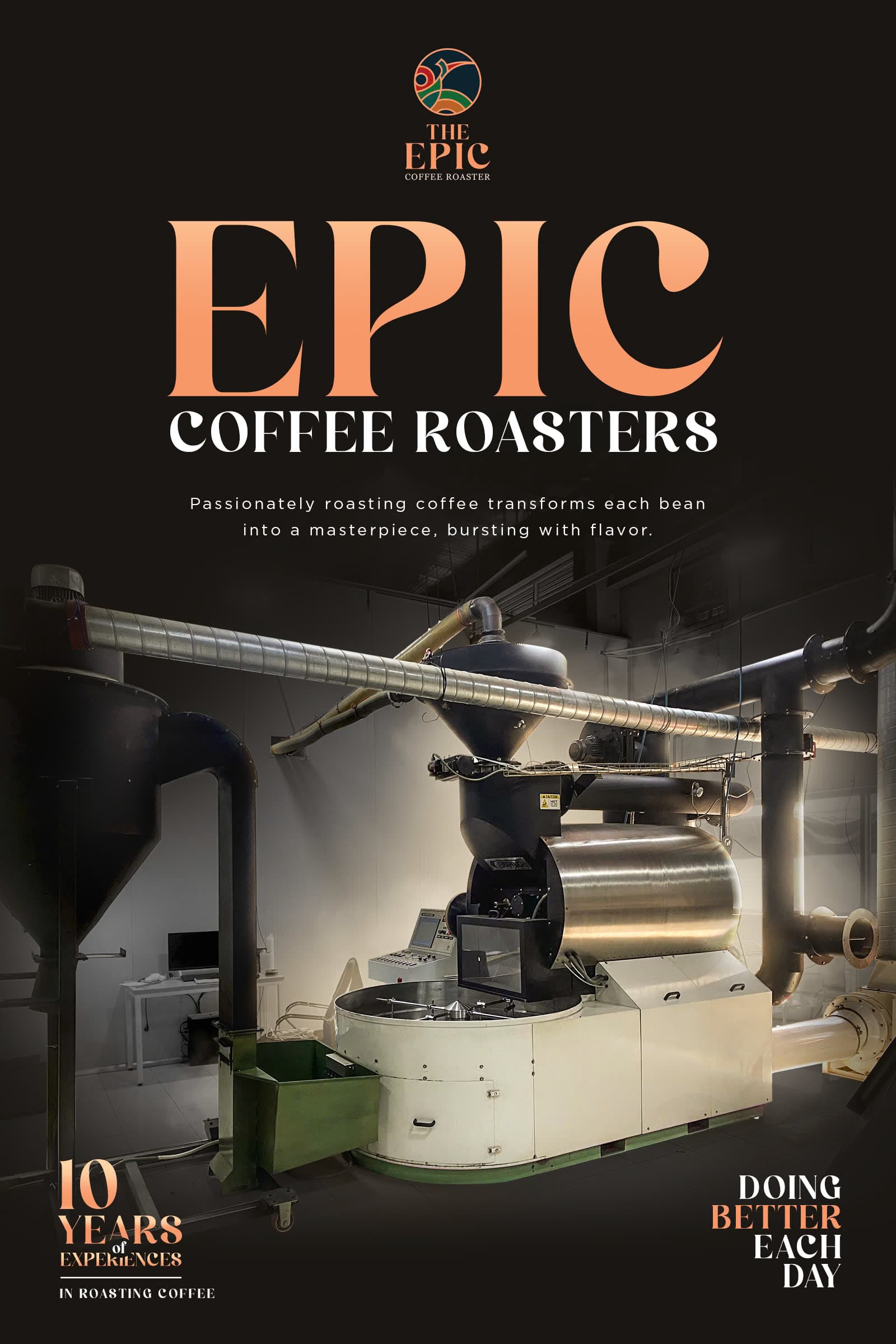
EPIC Coffee Roaster has roasted on a drum machine in Saigon since 2014, building profiles batch by batch for our own retail coffee and for partner orders, with green coffee hand sorted before roasting, rested after roasting, and packed to order. Our coffee has been exported to Russia and the Netherlands. We work from our roastery at 54/8 Ao Doi, Binh Hung Hoa, Ho Chi Minh City, and our cafe at 49 Ngo Thoi Nhiem, Vo Thi Sau Ward, District 3, Ho Chi Minh City. Alongside retail coffee and custom B2B roasting, we handle OEM packaging, full cafe setup, barista training, and coffee equipment consulting, sales, rental, and repair — plus cupping and sample dispatch so you can approve a profile before it reaches your bar.
If you are sourcing coffee roasted to your specification and want to taste the difference process makes, start with a sample and a cupping session. Request wholesale samples and cupping for your cafe or business here.

We roast in-house at our own drum roastery in Sài Gòn — sourcing single-origin lots from a real, catalogued network and dialling profiles cup by cup for our own bar and for partners across Việt Nam.
@epiccoffeeroaster · Follow on InstagramSpecializing in