How to Choose Roasted Coffee for Your Taste: Dark, Light, Arabica or Robusta?

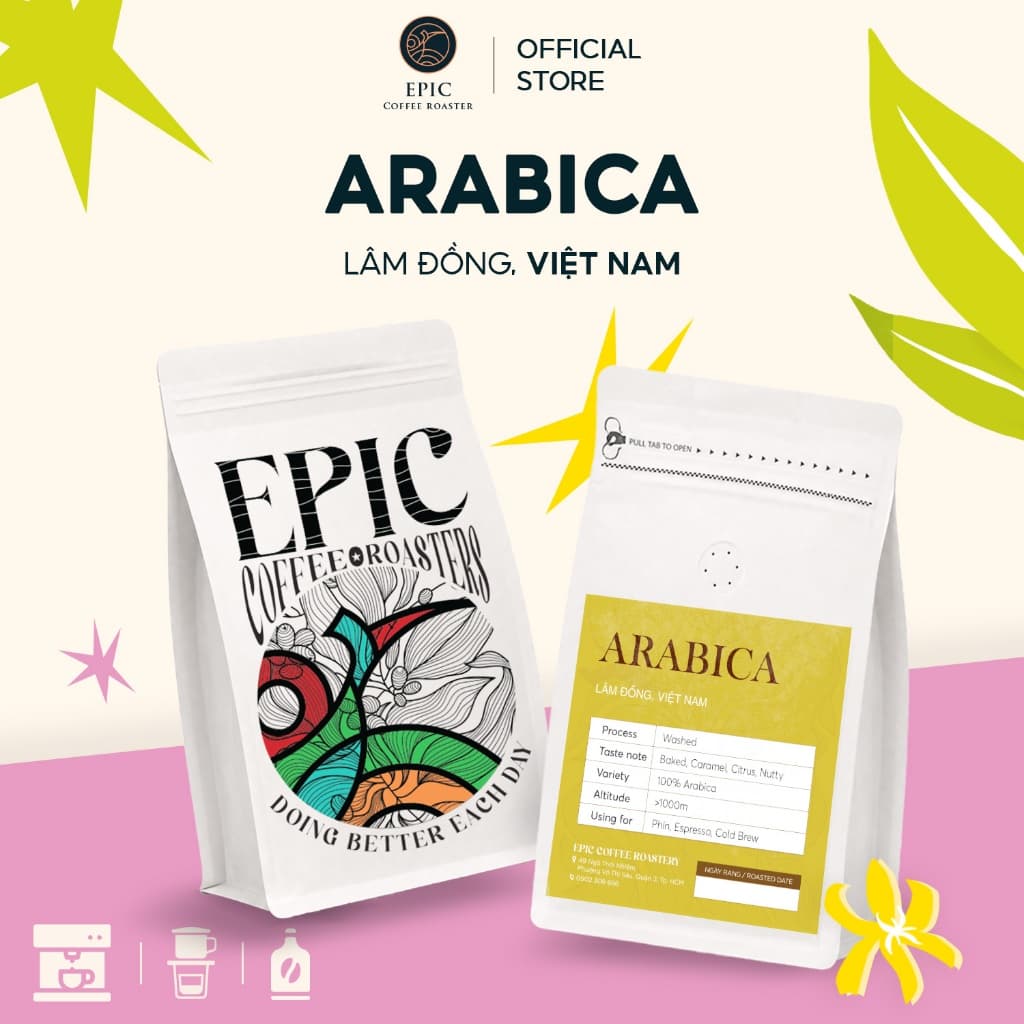
Standing in front of a shelf with dozens of roasted coffee bags, most people buy on gut feel: nice packaging, an unfamiliar name, or just the cheapest bag. A few basic rules let you pick the right match for your own palate on the first try, instead of trial and error.

Dark and light aren’t “better” and “worse”
A common mistake is assuming a “dark” roast means better coffee and a “light” roast means weak, low-quality coffee. Roast level is really about two things: how long the beans were roasted (light roasts keep more of the bean’s natural acidity and fruit/floral notes; dark roasts bring out bitterness, a light smokiness, and caramel-like finish) and how the beans were processed before roasting (natural processing gives a heavier sweetness, washed gives a cleaner, brighter cup, honey sits in between). Neither is objectively “correct” — it’s about what matches your own taste.
What actually separates Arabica from Robusta
Arabica tends to have brighter acidity and more complex aromatics — floral, fruity, sometimes chocolatey — with lower caffeine content. Robusta is heavier, more bitter, with a stronger finish and noticeably more caffeine — which is exactly why traditional Vietnamese phin coffee usually leans on Robusta or a Robusta-heavy blend, since it holds up against a strong brew served with ice or condensed milk. If you’re used to that traditional phin cup, a dark-roast Robusta or an Arabica-Robusta blend will likely suit you better than a single-origin light-roast Arabica.
Three questions to figure out your own preference
Before buying, ask yourself: Do you usually drink it black, or always with milk/condensed milk? Do you prefer a lighter, fruit-forward acidity or a heavier, traditional bitterness? Do you brew with a phin, an espresso machine, or a pour-over? The answers to these three questions largely decide whether you should reach for Arabica or Robusta, light roast or dark.
Market context
According to a market roundup published by MPR (Market and Product Research) in July 2026, Vietnam’s specialty coffee segment is projected to grow at roughly 6.95-7% annually, targeting 11,000 tonnes of output by 2030; notably, 41.1% of surveyed consumers said they’re willing to pay more for coffee with sustainability or quality credentials — a sign that Vietnamese coffee drinkers, particularly younger urban consumers, are paying closer attention to origin and quality rather than choosing purely on price.
Why choose EPIC
- Just like the “roast level” and “processing method” factors above, EPIC tunes both per batch — so you can ask for a lighter or darker roast that matches the preference you just worked out for yourself, instead of picking from a few fixed options.
- If your taste leans toward traditional phin brewing as described above, EPIC stocks both a Robusta from Bảo Lộc and Arabica-Robusta blends — not only single-origin Arabica for espresso drinkers.
- Green beans are hand-sorted before roasting, so the “clean cup” quality of washed processing mentioned above isn’t undercut by defective beans or debris.
- Coffee rests after roasting before it’s packed to order, so the bright acidity or caramel finish you just read about is still there when it reaches you, not faded from sitting in a warehouse.
Browse EPIC’s current lineup of roasted coffee on the product page to find the match for your own taste.

We roast in-house at our own drum roastery in Sài Gòn — sourcing single-origin lots from a real, catalogued network and dialling profiles cup by cup for our own bar and for partners across Việt Nam.
@epiccoffeeroaster · Follow on InstagramSpecializing in