What Is a Private Roast Profile?

If your café is pouring the same off-the-shelf roasted coffee as a dozen other shops on the same street, it’s hard for customers to remember what makes your cup different. A private roast profile is how many F&B brands are building a taste no one else can copy. Here’s what a private roast profile actually is, how the process works, and when it’s worth considering over buying pre-roasted coffee in bulk.

Private roast profile vs. off-the-shelf roasted coffee
Mass-roasted coffee runs on one fixed profile for large volumes, without accounting for your specific taste target or how your shop actually brews — phin, espresso, or cold brew. A private roast profile means the roaster works with you to lock in three things: the bean (Arabica, Robusta, or a custom blend ratio), the roast level (light, medium, or dark), and the exact temperature/time curve — so the result is the flavor you want customers to associate with your brand, not a generic taste anyone else can buy elsewhere.
How the process actually works
A roaster typically runs a few small test batches at different roast levels on the same bean, then sends samples for you to taste or brew exactly the way you serve customers. Based on that feedback, the profile gets adjusted — shortening roast time to keep a brighter acidity, or extending it for a heavier, sweeter finish — until it matches what you’re after. Once it’s locked in, every production batch afterward follows that same profile, so order number ten still tastes like order number one.
Market context
According to Grand View Research’s Roasted Coffee Market report (published July 2024), the B2B distribution channel accounted for 54.17% of revenue in the global roasted coffee market, valued at $44.9 billion in 2023 — driven largely by cafés, restaurants, and offices that need a consistent, quality-controlled supply from specialized roasters rather than running roasting in-house.
Why choose EPIC
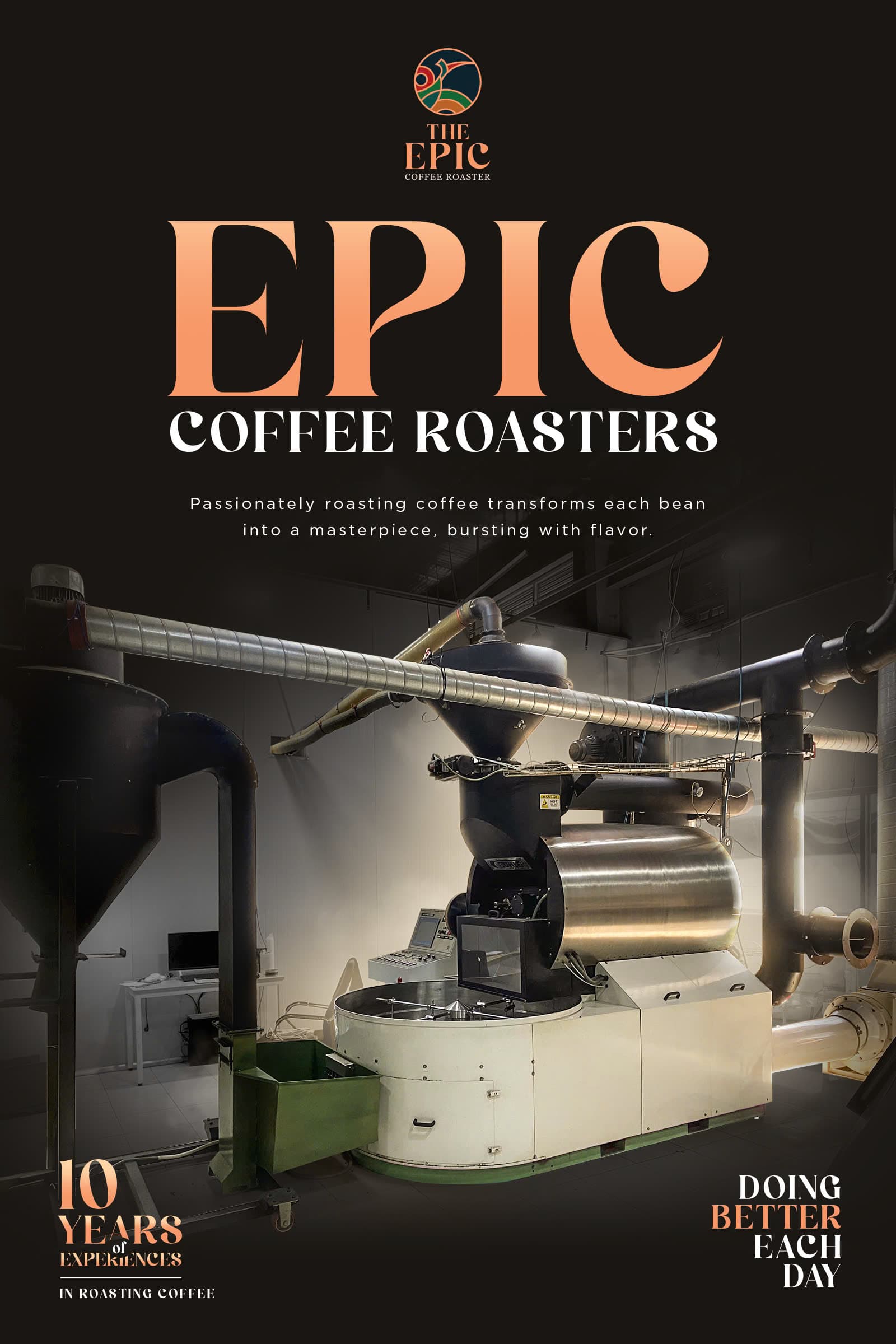
- EPIC has roasted its own coffee on drum roasters in Saigon since 2014, tuning the profile batch by batch — exactly the kind of operation needed to build a private roast profile like the one described above, not a single formula applied to every client.
- Green beans are hand-sorted before roasting, so when we’re testing a profile for your shop, sample batches aren’t skewed by defective beans throwing off the cupping results.
- EPIC coffee has been exported to Russia and the Netherlands — the same B2B operational discipline now goes into every private-roast partner locally.
- Coffee rests after roasting before it’s packed to order, so the profile you signed off on still tastes the same by the time it reaches your shop — no flavor loss from sitting in a warehouse.
As checked on 1 October 2026, EPIC’s B2B page lists a 5 kg monthly minimum, quote-only pricing, and free delivery for recurring monthly orders. Prepare your menu or brew method, expected volume, and delivery schedule to get a relevant proposal.
Want to build a private roast profile for your café? Reach out through EPIC’s B2B & Wholesale page to arrange a first test batch.

We roast in-house at our own drum roastery in Sài Gòn — sourcing single-origin lots from a real, catalogued network and dialling profiles cup by cup for our own bar and for partners across Việt Nam.
@epiccoffeeroaster · Follow on InstagramSpecializing in